Discover Whimsy Maxxing to Boost Joy and Beat Burnout Every Day
By Scott Sanders
Busy parents juggling work and caregiving, frontline professionals, and overstretched remote workers often know the same grind: days packed with responsibility while their nervous systems stay stuck in overdrive. When burnout recovery feels out of reach, even basic mental health strategies can start to feel like one more task to manage. Whimsy maxxing offers a gentler entry point by making room for childlike joy and the psychological benefits of play, which can loosen stress patterns and support emotional regulation. By inviting dopamine activation through small moments of lightness, daily life can start to feel more breathable.
What Whimsy Maxxing Really Means
Whimsy maxxing is the practice of intentionally adding tiny, playful sparks to ordinary moments, even when life feels heavy. It leans on the psychology of playfulness, since play is innate to us and can soften a threat-focused mindset. Those small cues of fun also nudge your brain’s reward system, where pleasure is defined as liking, and can help shift you out of emotional overload.
This matters because burnout is not only about workload. It is also about a nervous system that forgets how to downshift. Whimsy gives your mind a safe “micro-break” that supports a steadier mood, clearer thinking, and more room for imagination. Picture a rushed morning: you choose a bright, silly sticker for your laptop, hum a cartoon theme, and take one theatrical sip of coffee. Nothing big changed, but your brain got a quick signal that you are allowed to feel okay.
Design a Whimsical Mug That Brightens Your Daily Ritual
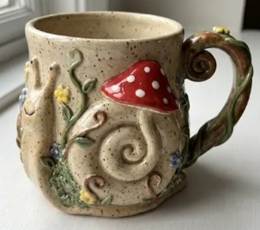
Once you understand whimsy maxxing as a real psychological reset, it gets easier to spot places where a tiny dose of play can live in plain sight, like the mug you reach for every morning. Designing a whimsical mug covered in colorful illustrations, playful patterns, or a cheerful saying turns an ordinary coffee or tea break into a small ritual that cues joy and creativity on purpose. Instead of drinking from “just a mug,” you’re interacting with something that reflects your imagination, bright florals, goofy doodles, bold color blocks, or words that make you smile before you’ve even taken a sip.
If you’d like to make one, a custom mug design and printing service can keep the process simple while still giving you real choices: multiple mug styles, full-wrap or accent printing, transparent pricing with no hidden fees, and reliable delivery so it arrives when you expect it. You can explore diverse mug options and choose the format that best matches the vibe you want to bring to your daily routine.
Practice Whimsy Today: Small Plays That Calm Your Nervous System
Whimsy maxxing doesn’t have to be a big project; it works best as small, repeatable moments that signal safety to your nervous system. Pick a few daily joy practices below and treat them like “micro-recess” for your brain.
- Do a 60-second sensory reset (then name it): Pause and choose one sense to focus on for one minute, notice five colors, trace the rim of your mug, or listen for three distinct sounds. Then label the moment with a playful title like “Tea-Time Lighthouse” or “Forest in a Cup.” This simple structure supports nervous system regulation by shifting you from mental spinning to present-moment input.
- Give your mug a tiny storyline: If you designed a whimsical mug, use it as a cue for imaginative activities: pick a “character role” for the day (brave astronaut cocoa, gentle librarian tea). While it fills or steeps, take three slow breaths and ask, “What would my character do kindly for me in the next hour?” You’re pairing comfort with creativity, which makes stress-relief techniques easier to remember.
- Create a 3-song “whimsy ladder” playlist: Choose one grounding song, one light/fun song, and one “victory lap” song. When you feel frazzled, play them in order while you do one low-stakes task (dishes, folding, a short walk). The predictable progression gives your body a sense of sequence and completion, an underrated way to calm anxious energy.
- Return to a joy space on purpose: Schedule 10–20 minutes this week to revisit spaces that bring joy, a park bench, a craft drawer, a library corner, or a cozy chair for fairy stories. Go with one tiny mission: collect one leaf, sketch one doodle, read one page, or write one silly sentence. Repetition matters more than intensity; your brain learns, “We do have places we can rest.”
- Try “tiny mischief” that harms no one: Add one harmless surprise to your day: wear mismatched socks, draw a smiley face on a sticky note, or rename your water bottle “Hydration Potion.” This kind of creative playfulness interrupts perfectionism and gives your nervous system a quick “all clear” signal. Keep it subtle if you’re self-conscious; private whimsy still works.
- Run a 2-minute “worry-to-wonder” rewrite: Write one stress thought exactly as it appears (“I’ll never catch up”). Under it, write a gentler, more curious version (“What’s the smallest next step I can do in 5 minutes?”). For extra whimsy, answer as a fairy-tale helper or wise animal. This keeps the problem in view while shifting your brain toward agency.
- Set a “hyper-online” boundary with a playful substitute: If scrolling ramps you up, experiment with whimsy as a rejection of performative, always-on energy. Try a 15-minute “offline pocket” once a day and replace it with something tactile: collage scraps, a mini puzzle, hand-stretching, or rearranging a shelf by color. Your nervous system often settles faster when your hands are busy, and your attention is single-tasked.
Whimsy Maxxing Questions, Answered
Q: What if whimsy maxxing feels childish or “cringe” to me?
A: That hesitation is common, especially if you were taught play has to be earned. Start with private, low-visibility choices like a funny phone wallpaper or a quirky label on your water bottle. If it brings even 2 percent relief, it is doing its job.
Q: How do I know if I’m using whimsy to avoid my real feelings?
A: Use it as a bridge, not a bypass: try a quick check-in first, like “What am I feeling right now?” then add one gentle, playful step. If the feeling gets louder afterward, that is useful information, not failure.
Q: Can whimsy maxxing actually help with burnout, or is it just a distraction?
A: Small pleasant moments can interrupt stress spirals and help your body downshift, which makes problem-solving easier afterward. Think of it as nervous system first aid, then choose one doable task.
Q: Why do I feel guilty for resting or enjoying tiny joys?
A: Guilt often comes from old beliefs that struggle equals virtue. Many mental health disorders are shaped by social, emotional, psychological, and biological factors, so it is not about being “weak.” Try reframing joy as maintenance, like charging a battery.
Q: When should I consider extra support beyond self-help tools?
A: If you feel stuck, numb, panicky, or unable to function, it is wise to reach out to a therapist, your primary care clinician, or a local helpline. The fact that one in four people will be affected by a mental or neurological disorder means you are not alone, and support is normal.
Building Lasting Joy With Whimsy Maxxing Week by Week
When life feels like a nonstop checklist, it’s easy to lose color, energy, and the sense that you’re more than your responsibilities. Whimsy maxxing offers a gentle mindset shift: embracing playfulness as a sustainable mental health habit, grounded in positive psychology rather than pressure or perfection. Over time, this kind of ongoing joy cultivation can soften burnout, strengthen resilience, and support long-term wellbeing without demanding more willpower. Play isn’t childish; it’s a renewable resource for mental health.